Newcastle marathon recap
Another marathon in the bag.
I always like writing these a few days after the event rather than immediately afterwards. If I write too soon, there is usually a bit too much emotion in it. Waiting gives me the chance to reflect properly and be a little more rational about what actually happened.
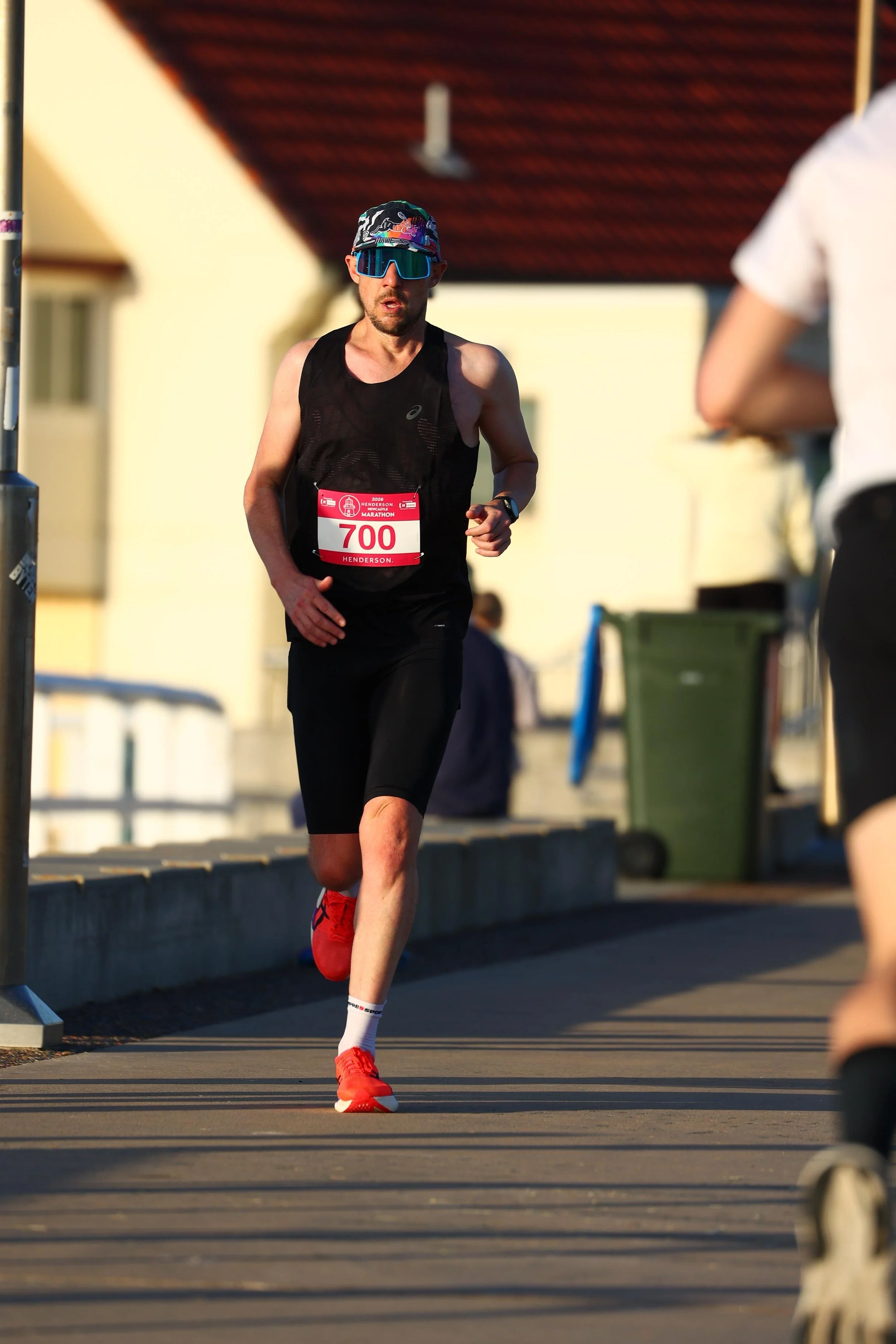
Newcastle was a bit of a last-minute addition. I wanted to race before Sunshine Coast in August so I could get a clearer sense of where I was at, and on reflection I think that was a really good decision. The result might not have been exactly what I wanted on paper, but it gave me something valuable: feedback.
The time was 3:30, which was two minutes slower than the 3:28 PB I ran in Auckland last November.
My first feeling was disappointment. After continuing to train for almost six months, not lowering my PB felt like I had come up short, and the truth is I probably did. But once I looked at it more honestly, the result made a lot more sense.
If I review the training block since November, there were clues there all along. I didn’t run much in November because of a foot issue after Auckland. I only managed 104km for the month, and that included the marathon itself, so there was not a lot of meaningful running after the race. December was not much better at 124km, as I gradually built back into it while also dealing with the usual Christmas period and shifting priorities.
Things started to improve in January when I got back to 192km. Around that time I also started using AI to help guide my training. The plan was to run more frequently, keep the runs a little shorter, and slow the pace down so I could gradually build my weekly kilometres. It was more of a long-term approach, and by and large it worked. I continued that in February with 180km, despite it being a shorter month, and I was now running five to six times a week rather than three to four. Just as importantly, I was not feeling as tight or beaten up from the sessions.
Then came the last six weeks, and that is probably where the bigger story sits. Three of those weeks were spent on holidays in Europe, and while I did run, it was not really quality running. That was then followed by a relatively short taper into Newcastle. In short, life and long-term consistency were prioritised over building the perfect short-term block to attack a PB. That does not mean I did not race hard, but it does mean the lead-in was not ideal if the goal was to run my absolute best.
The race plan itself was simple enough. I decided to head out at 4:45/km and see how long I could hold on, hoping that would bring me home somewhere around 3:20. At the time I did not think that was wildly ambitious and felt it might be achievable. Looking back now, based on the training I had actually done, I probably was not entitled to be overly confident in holding that pace for the full distance.
That said, there were positives in the run. I managed to hold that 4:45/km pace through to 33km, which is actually further than I held a slightly slower pace in Auckland. The issue this time was that when I blew up, I blew up properly. I could not even maintain much of a shuffle, and the pace dropped away badly. The roughly four minutes I had up my sleeve at 30km disappeared quickly and turned into a two-minute deficit by the finish.
As frustrating as that was, it still gave me some really useful lessons.
The first is that my fueling strategy worked better. The gels went down and stayed down, which was a positive step forward. Hydration is probably the area that still needs attention. It was not always clear what was electrolyte and what was water at the aid stations, and I think I could have managed that part better.
The second is that I am probably ready for more volume. I think I am now at a point where I can handle more weekly distance, and I need more long runs in the bank, even if some of them are done at a slower pace.
The third is that I need to sort out some mechanical issues. I overload my hamstrings because I have weak or inactive glutes, and that is something I need to address properly. Alongside that, improving flexibility should help with range of motion, form, and overall running efficiency.
The final takeaway is that I need a better test closer to race day. Something that gives me a more accurate read on where I am at would help me make smarter pacing decisions rather than relying too heavily on hope and ambition.
So overall, while I fell short of the PB, I actually see Newcastle as a positive result. To blow up as badly as I did and still only miss my PB by around two minutes says there was still a solid run in there. More importantly, the race gave me clear feedback on what needs to improve. That makes it useful. If I take those lessons, turn them into action, and follow through, then I think this race will end up being a step forward rather than a setback.
The result was not exactly what I wanted, but it moved me forward — and sometimes that is just as valuable.